
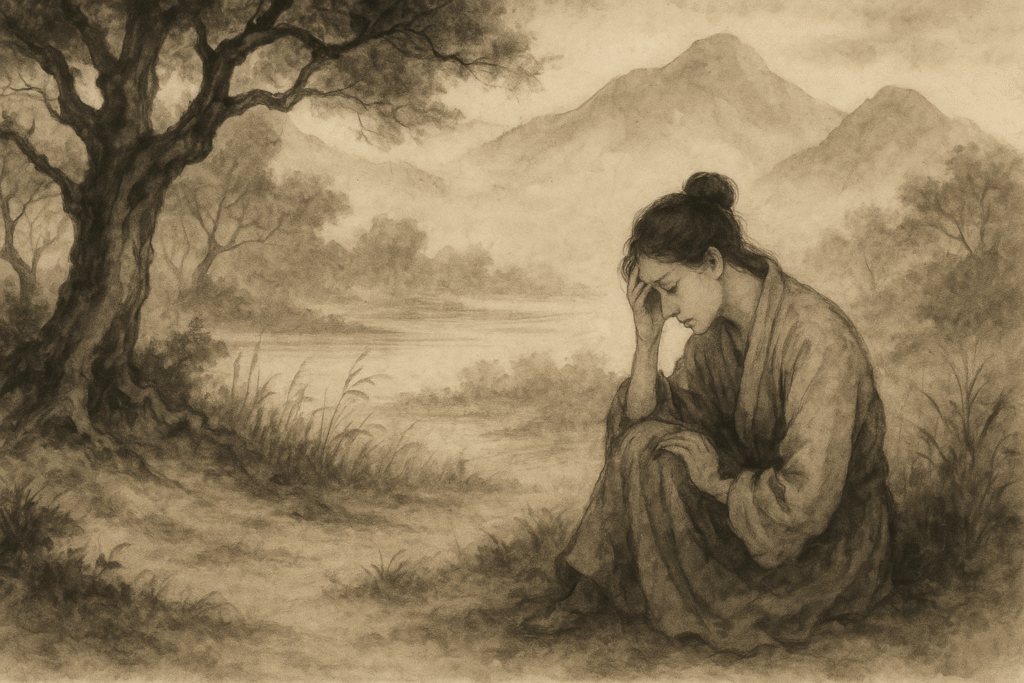
Anxiety is a common human experience that, when persistent or severe, can significantly impact well-being and daily life. Across various medical traditions, including Traditional Chinese Medicine (TCM), methods have been explored to address anxiety and its associated symptoms, often offering a path towards natural anxiety relief. The provided sources offer insights into how acupuncture approaches anxiety from both its historical roots in TCM and through the lens of modern scientific investigation, including specific techniques like auricular and scalp acupuncture.
Traditional Chinese Medicine Understanding of Anxiety
Within the philosophy of Traditional Chinese Medicine, there is no strict separation between physical and psychological conditions. Anxiety is often viewed as part of a broader pattern of disharmony within the body’s energetic systems. Karen Pilkington, in their chapter “Acupuncture Therapy for Psychiatric Illness” within the book Neurobiology of Acupuncture, states that acupuncture has traditionally been used for problems including anxiety, insomnia, stress, and depression in China and other East Asian countries. Rob Aspell, in their book The Practice of Tui Na, discusses anxiety (You) as a condition where Qi becomes blocked, particularly in the upper Jiao (the upper part of the torso), often associated with the Lungs and Heart. Anxiety can manifest with symptoms such as chronic feelings of overwhelm, shallow breathing, palpitations, insomnia, excessive worry, difficulty concentrating, an exaggerated startle response, feelings of inner tension, and nervousness.
According to TCM principles described in the sources, anxiety can stem from various underlying imbalances, including:
- Excessive heat and Qi rising to the head, potentially due to Qi, Kidney, or Heart Yin deficiency.
- Disharmony of the Heart and Kidney leading to Yin deficiency.
- Insufficiency of Qi and Blood.
- Disturbance of the Heart by phlegm-fire.
- Liver Qi stagnation.
- Heart and/or Gallbladder Qi deficiency.
- Heart Blood deficiency.
- Yin Xu with Empty Heat disturbing the Shen (Spirit).
Acupuncture aims to address these underlying imbalances to regulate the flow of Qi and Blood, calm the Shen (the spirit or mind housed in the Heart), and restore harmony, forming a key part of a holistic approach to anxiety.
Acupuncture Points and Modalities for Anxiety
Numerous acupuncture points are mentioned across the sources for their use in treating anxiety and its related symptoms. Some commonly cited points include:
- HT-7 (Shenmen): Described as calming the mind, regulating and tonifying the original Qi of the Heart, stopping palpitations, and having a profound effect on relaxing tension and irritability. It is listed among points for treating anxiety disorders and is part of point combinations for palpitation with anxiety or fear.
- PC-6 (Neiguan): Said to calm the spirit, regulate the Heart, unbind the chest, relieve mental stress, and be very calming emotionally. It is part of a point combination described as the “Buddha’s Triangle” (HT-7, PC-6, LU-9), used to calm the mind for anxiety, insomnia, depression, sadness, and repressed emotions.
- Yintang (EX-HN 3): An extra point located between the eyebrows, consistently mentioned for its ability to calm the mind and spirit. It is suggested to have immediate benefit in acute anxiety.
- DU-20 (Baihui): Located on the top of the head, mentioned for calming the spirit, regulating Liver Yang, benefiting the Heart, and refreshing the mind. It is described as where the body’s Yang energy converges and is important for stress, irregular sleep, depression, or anxiety.
- SP-6 (Sanyinjiao): A crossing point of the Liver, Spleen, and Kidney channels, used to nourish Yin and Blood, calm the mind, regulate the Liver and Spleen, and invigorate Blood. It is listed for treating anxiety disorders and mentioned for nervous tension, fear, restlessness, and insomnia.
- KD-1 (Yong Quan): Located on the sole of the foot, used to descend rising panic and anxiety, grounding the spirit.
- KI-9 (Zhubin): A Xi-Cleft point of the Yin Wei Mai, used for anxiety related to performance and work stress, helping to ground patients and transform obsession.
Other body points mentioned include DU-24 (Shenting), LV-5 (Ligou), LV-14 (Qimen), SI-7 (Zhi Zheng), ST-30 (Qichong), BL-15 (Xinshu), BL-44 (Shentang), GB-8 (Shuaigu), GB-13 (Benshen), GB-20 (Fengchi).
Specific acupuncture modalities are also discussed in relation to anxiety:
- Auricular Acupuncture: Skya Abbate, in their book Chinese Auricular Acupuncture, provides detailed discussion on using ear points for anxiety. Points like Shenmen, the Relaxation Point/Hypertension point in the triangular fossa, and the Anxiety point are highlighted. Auricular acupuncture has been studied for preoperative anxiety, dental anxiety, and maternal anxiety. Some sources suggest auricular acupuncture can work faster and have longer-lasting effects than body acupuncture for certain conditions. It is also used in specific protocols like the NADA protocol, which is noted as very effective for opioid withdrawal anxiety.
- Scalp Acupuncture: Anne Angelone, in their book Functional Scalp Acupuncture, states that Functional Scalp Acupuncture (FSA) aims to improve neuroimmune disorders including anxiety by stimulating relevant brain regions. It explicitly addresses the “Neurobiological Signature of Anxiety Disorder”. Stimulating scalp points on GB and Du channels, with or without electrical stimulation, can lead to improvements in anxiety disorders like GAD, panic disorder, OCD, and PTSD. FSA targets specific brain areas like the amygdala (GB-8, GB-9), ventromedial prefrontal cortex (vm PFC) (DU-24), and anterior cingulate cortex (ACC) (DU-23) to calm the emotional brain and improve top-down control.
- Electroacupuncture (EA): Using electrical stimulation with needles is mentioned for anxiety. EA modulated GABA and monoamine neurotransmitters in stress-induced anxiety in animal models, increasing inhibitory GABA and decreasing excitatory monoamines. It can enhance the effect of treatment and has been used in studies on dental and preoperative anxiety.
- Acupressure: Applying pressure to acupuncture points is also used for anxiety, including points like HT-7 (Shenmen) and PC-6 (Neiguan). Auricular acupressure using seeds or balls is also mentioned for anxiety.
Neurobiological and Physiological Mechanisms
The sources explore potential mechanisms by which acupuncture may alleviate anxiety, drawing on neurobiological research.
- HPA Axis Regulation: Acupuncture may modulate the hypothalamic–pituitary–adrenal (HPA) axis (the body’s main stress response system, involving interactions between the hypothalamus, pituitary gland, and adrenal glands). This axis is a key component of the stress response and is implicated in anxiety disorders. This modulation may lead to decreased sympathetic outflow, increased parasympathetic activity, and reduced cortisol levels. Chronic stress affects the hypothalamus and amygdala, influencing this axis.
- Neurotransmitter Modulation: Acupuncture is suggested to modulate neurotransmitters involved in mood and anxiety, including serotonin, norepinephrine, dopamine, glutamate, and GABA (gamma amino butyric acid, a neurotransmitter often involved in reducing neural activity). It may influence serotonin receptor expression linked to improved anxiety behaviors and increase inhibitory GABA while decreasing excitatory monoamines (neurotransmitters like serotonin and norepinephrine, involved in mood and stress responses) in stress-induced anxiety.
- Autonomic Nervous System (ANS) Balance: Acupuncture is proposed to modulate the ANS (the system controlling involuntary bodily functions like heart rate, digestion, and respiration), shifting the balance towards parasympathetic dominance (the “rest and digest” state) and away from sympathetic hyperactivity (the “fight or flight” state) associated with stress and anxiety.
- Limbic System Modulation: Imaging studies suggest acupuncture mediates anti-anxiety effects through modulating the limbic–paralymbic–neocortical network (brain areas involved in processing emotions, motivation, and higher-level functions). This modulation can involve calming the amygdala (a key area for processing fear and emotional responses), hypothalamus, and hippocampus, while influencing areas like the ventromedial prefrontal cortex (vmPFC) and anterior cingulate cortex (ACC).
- Oxytocin Release: Acupuncture may induce the release of oxytocin, a neuropeptide linked to decreased anxiety and the inhibition of fear responses.
- Endogenous Opioid Release: Acupuncture stimulates the release of endogenous opioids (natural pain-relieving chemicals produced by the body), known for their analgesic effects, which may also contribute to relaxation and reduced anxiety.
Clinical Observations and Research Findings
Several sources discuss clinical applications and research related to acupuncture for anxiety. Jacqueline Filshie and Adrian White, in their book Medical Acupuncture, note that evidence for acupuncture in treating anxiety looks promising in specific areas like dentistry, surgery, and sports medicine, as well as in rat models. They do, however, cite a systematic review (Pilkington et al., 2007) that noted a “dearth of studies” overall at that time. Despite this, Filshie and White also mention more recent studies on anxiety and those including anxiety measurements. Some sources suggest that while clinical trials for generalised anxiety disorder and PTSD have not always been conclusive (as of the sources’ publication dates), beneficial effects have been reported in short-term anxiety.
Clinical observations and case studies report acupuncture helping to reduce anxiety symptoms. Patients have reported feeling calmer, more relaxed, and less tense after treatment. Acupuncture has been found useful in managing anxiety during opioid withdrawal and in reducing preoperative anxiety. The relaxation often experienced as a side effect of acupuncture may be harnessed to manage mild to moderate dental anxiety.
The convergence of these traditional understandings and modern scientific explorations suggests that acupuncture offers a multifaceted, holistic approach to managing anxiety. As research continues to unravel the precise ways acupuncture influences the mind-body connection, its role as a supportive therapy for emotional well-being and natural anxiety relief is likely to become even more clearly defined. For individuals seeking pathways to navigate the complexities of anxiety, understanding how these ancient techniques are being validated and integrated into contemporary care may offer a valuable avenue for consideration and further exploration.