
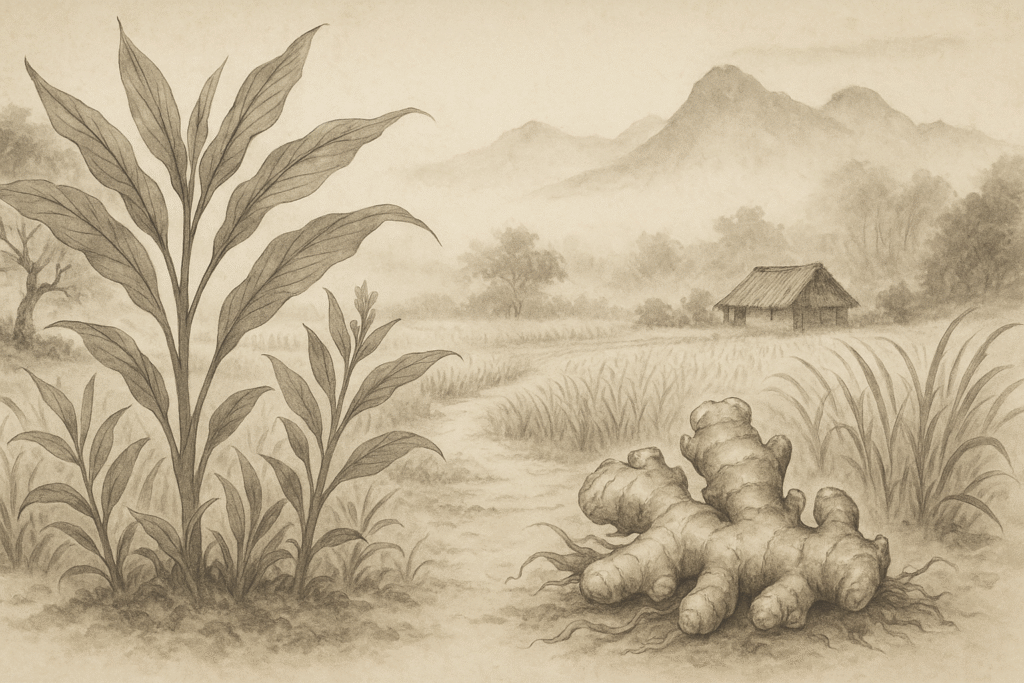
Ginger (Zingiber officinale Roscoe) is more than just a popular spice; it’s a perennial herb with a rich history and a powerhouse of medicinal properties. Let’s delve into the fascinating world of this remarkable rhizome.
Identity, Origin, and Cultivation
- Family Ties: Ginger belongs to the Zingiberaceae family, which also includes other well-known spices like turmeric (Curcuma longa) and cardamom.
- Ancient Roots: While its exact origin is unknown, ginger has been cultivated for over 4,000 years in China and India, reaching the Western world around 2,000 years ago. It is native to Asia but is also cultivated in tropical areas like India, Jamaica, Nigeria, and Haiti.
- Global Spice: It’s a widely popular spice, with world production estimated at 100,000 tons annually, with China being the largest producer (around 80%).
- Growing Conditions: Ginger thrives in warm, humid climates, preferring sheltered locations, filtered sunlight, and rich soil. It is rarely found wild and is almost always cultivated from pieces of the root (rhizome) that have buds. The plant typically grows 2 to 3 feet in height.
- What’s in a Name? The genus name Zingiber is of ancient Hindu extraction, meaning “horn-shaped,” referring to the appearance of the rhizome.
- Choosing the Best: When selecting fresh ginger, look for plump, smooth-skinned roots that feel heavy for their size (indicating they are full of juice) and have a strong fragrance. A clean break, without hair-like fibers, is a good sign of quality.
Not All “Gingers” Are Created Equal
It’s important to distinguish Zingiber officinale from other plants sometimes referred to as ‘ginger’:
- Chinese Wild Ginger (Asarum spp.): While also considered medicinal, some species of wild ginger contain aristolochic acid, a known toxin. Therefore, serious reconsideration of their use for internal medication is advised.
- Other “Gingers”: Other roots sometimes called ginger include Mioga ginger (Zingiber mioga), the ginger of Kao-liang (Alpinia kumatake), and ginger dioscorea (Dioscorea zingiberensis). Alpinia species (galangals) are close relatives of culinary ginger and share similar antiviral actions.
Parts Used and Key Chemistry
- The Powerhouse Part: The root (rhizome) is the part of the ginger plant used for both culinary and medicinal purposes.
- Complex Composition: Ginger contains over 400 constituents, including notable compounds like:
- Gingerols: These volatile oils are very potent but are significantly reduced in dried roots. Fresh roots contain 6 to 15 times more gingerols than dried ones.
- Shogaols: Many constituents convert to shogaols as the root dries. Shogaols appear to be primarily responsible for ginger’s anti-inflammatory effect.
- Zingiberol and Zingiberene
- Volatile Oils: These are the most antiviral components of ginger.
A Rich History of Traditional Uses
Ginger boasts a long and esteemed history as a medicinal agent, appearing in ancient Chinese, Indian, Arabic, and Greco-Roman texts.
- Broad Applications: Traditionally, it has been used for a wide range of conditions, including colds and flu, nausea, and poor circulation. It also possesses strong antibacterial activity against foodborne pathogens and has been used for food preservation. Eating pickled or candied ginger slices can be a healthy stimulant.
- Ayurvedic Staple: In Ayurveda, ginger has a very long history of use for:
- Dyspepsia (indigestion)
- Flatulence
- Colic
- Vomiting
- Stomach and bowel spasms
- Cold, cough, and asthma
- Lack of appetite
- Fever
A common Ayurvedic preparation is fresh ginger juice mixed with sugar and water.
- Traditional Chinese Medicine (TCM) Perspectives: In TCM, fresh ginger root (sheng jiang) and dried ginger root (gan jiang) are considered distinct medicines with very different actions.
- Fresh Ginger (Sheng Jiang):
- Properties: Pungent, warm, and non-toxic.
- Actions: Used as a diaphoretic (promotes sweating), antiemetic (reduces vomiting), mucolytic (breaks up mucus), antitussive (suppresses cough), detoxicant, and anti-inflammatory.
- Specifics: Considered specific to warm the Lungs. Used for wind-cold conditions (severe intolerance to cold) with symptoms like slight fever, headache, general ache, nasal congestion, runny nose, cough, and vomiting. It has a general dispersing function.
- Common Use: Often accompanies every meal and can be used as an assisting material when processing other herbs. Ginger is commonly included in Chinese herbal formulas (estimates suggest up to half), often acting as a “guide” drug that helps other herbs reach their destination and can ameliorate the toxic effects of other drugs or herbs.
- Preparation Note: If used to counteract a supposed cooling property, the skin should be left on; if warming is the objective, the root should be peeled. The dressing known as “ginger-juice flavor” is a classic Sichuanese combination used for vegetables.
- Dried Ginger (Gan Jiang):
- Properties: Acrid, warming-heating, and lacking poison. Considered a “dry defense” against exterior cold. Its properties are bitter, acrid, and slightly astringent, and warm.
- Channels Entered: Spleen, Stomach, and Liver.
- Uses: For cough of the upper chest, abdomen pain, and huoluan swelling (a term referring to acute gastroenteritis-like symptoms).
- Processed Forms: Include blast-fried dried ginger (páo gān jiāng or jiāng tàn), which is stir-fried with sand until black or carbonized (retaining bitter, acrid, and warm properties), and roasted ginger (wēi jiāng). Dried ginger is also used in various traditional formulas.
- Sprouting Ginger:
- Properties: Acrid and slightly warming.
- Uses: For head pain from exogenous febrile diseases, asthmatic coughing, controlling vomiting, and clarifying the spirit.
- Fresh Ginger (Sheng Jiang):
Modern Actions and Scientific Research
Modern science has validated many of ginger’s traditional uses and uncovered further pharmacological properties.
- Key Known Actions:
- Anti-emetic: Highly effective for nausea and vomiting.
- Anti-inflammatory: A potent natural anti-inflammatory.
- Digestive Aid: Supports healthy digestion.
- Diaphoretic: Promotes sweating.
- Pain Relief (Analgesic): Ginger has an analgesic effect by inhibiting the release of substance P.
- Potent Anti-inflammatory Mechanism: It inhibits COX-1 and COX-2 enzymes, 5-lipoxygenase, and inducible genes for inflammatory cytokines and chemokines. This broad range of activity may explain its milder therapeutic activity and lower risk of serious adverse effects compared to some other herbs for pain.
- Studies have shown it provides relief from pain and swelling in patients with osteoarthritis and musculoskeletal disorders, sometimes comparably to ibuprofen.
- Massaging with ginger essential oil has also been found effective for knee pain.
- Nausea and Vomiting Relief: Ginger root is effective for treating nausea and vomiting, particularly severe morning sickness in pregnant women. The dried root may be more effective in severe cases, while the fresh root is often better for general nausea.
- Antiviral Properties:
- Sources indicate ginger is most effective as an antiviral when using the fresh rhizome, particularly the juice, due to the higher concentration of volatile constituents.
- It acts by inhibiting viruses at various stages (attachment, proteases, hemagglutinin, neuraminidase), stimulates antiviral macrophage activity, and is virucidal.
- Traditionally used for various viral infections, research suggests it is primarily a narrow-spectrum antiviral specific for respiratory infections, but a good supportive herb for most viral infections. Despite widespread traditional practice, there’s a noted lack of clinical work on its antiviral use.
- Gut Health:
- Ginger root interferes with the adhesion of enterobacterial disease organisms to the intestinal wall, which helps reduce GI tract infections, diarrhea, and bacterial load.
- It also reduces spasms in the intestinal tract.
- Circulatory Stimulant: Ginger promotes sweating, menstruation, and lactation and is used for conditions like cold hands or feet. Baking herbs with ginger makes them more warming and dispersing, promoting circulation and digestion.
- Immune Support: It has also demonstrated immunostimulant effects.
- Detoxification: Studies suggest ginger root can act as a detoxifier, reducing levels and toxicity of heavy metals like cadmium and the effects of organophosphate insecticides in rats.
- Antiparasitic: It has shown activity against endoparasites in ethnoveterinary practice and other trials.
- Antibiotic Synergy: Ginger compounds can be synergistic with some antibiotics, modifying bacterial resistance and potentiating their action.
- Other Potential Actions: Includes being an elastase inhibitor, hypotensive (lowering blood pressure), cerebroprotective (protecting the brain), and traditionally considered an aphrodisiac.
Safety and Precautions
- Generally Safe: Zingiber officinale has a lower risk of serious adverse effects compared to some other herbs.
- Mild Side Effects: Rare side effects like bloating, gas, heartburn, and nausea usually occur when using the dried, powdered root.
- Pregnancy:
- Commission E (a German regulatory body for herbs) contraindicates the use of ginger during pregnancy.
- However, controlled rat studies found no maternal or developmental toxicity at high doses.
- A prospective observational study of pregnant women using ginger in the first trimester reported no increased risk of adverse outcomes.
- Commercial ginger has been used extensively for morning sickness with no noted side effects. It’s always best to consult with a healthcare professional before using any herb during pregnancy.
- Wild Ginger Warning: As mentioned earlier, wild ginger (Asarum spp.) contains potentially toxic aristolochic acid, and its internal use should be reconsidered.